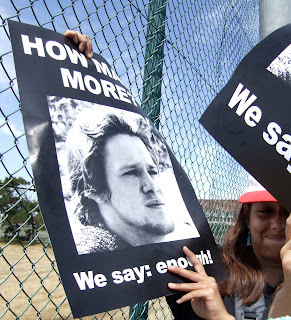
I debated for a while if I would post about this. Crime is South Africa's most talked-about issue, but one I usually like to ignore. Africa as a whole is always talked about so negatively. Little attention is given to the many brilliant scholars, doctors, scientists, theorists, musicians, artists, writers, etc. that come from the continent. I got countless warnings about safety before I came here. I listened closely but mostly, I blew them off. I was a confident, bright, self-sufficient young lady. I've been the victim of an armed mugging before. I mean, I lived in Lima. I didn't think twice about crime here, I was confident I'd just take it all in stride as I do most things, safe but sure.
However, I've definitely been struggling with bouts of fear and anxiety lately. Many international students I know have already been mugged, houses have been broken in to, my roommate was robbed on his way home from class, I was followed by a man who tried (unsuccessfully) to take my bag. Things to make you nervous, things that have cause me to take extra precautions, splurge for extra cab fares, never walk alone. But the news that a UCT student was brutally murdered last week on the very road I cross every day to get to school was shocking. It's one thing to mug tourists, to steal from the rich. But murder in cold blood is vicious and frightening. Where are the solutions? No one knows. UCT is trying to set up specially policed zones for the places around campus where students like me and my housemates walk around, but the police here aren't very reliable. It's such a complexly layered situation. There are so many poor and they are so marginalized. They're looking for money, for food. They often carry knives and guns. Sometimes they're involved in gangs. But they are very rarely caught or punished.
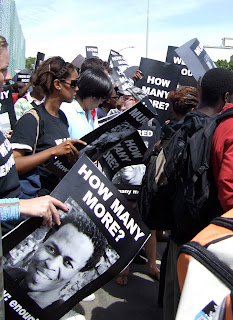
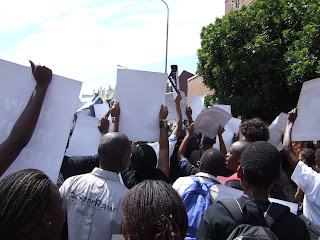
Today, in response to the death of Dominic Giddy the university held a memorial service and a protest march along Main Road. I marched with hundreds of students, singing, chanting, carrying signs, to the spot in which he was murdered. Members of the community came out of storefronts and their places of residence to cheer us on and show their support. It was inspiring to see everyone united, all races and walks of life, singing together, sometimes in Xhosa, sometimes in English: How many more? Where is the love?
You can read more about the event here:
http://www.uct.ac.za/dailynews/?id=7258
and here:
http://mycapetown.co.za/news/2010/02/we-say-enough-uct-community-to-protest-the-murder-of-student-dominic-giddy/
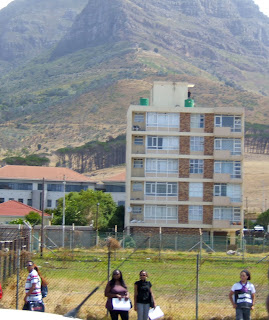
The scene of the crime and the end of our march

 the land around Camps Bay used to belong to black Africans. During Apartheid residents were moved to townships as a part of the forced removal policies instated by the government


 wine, oysters and sunsets at Camps Bay


